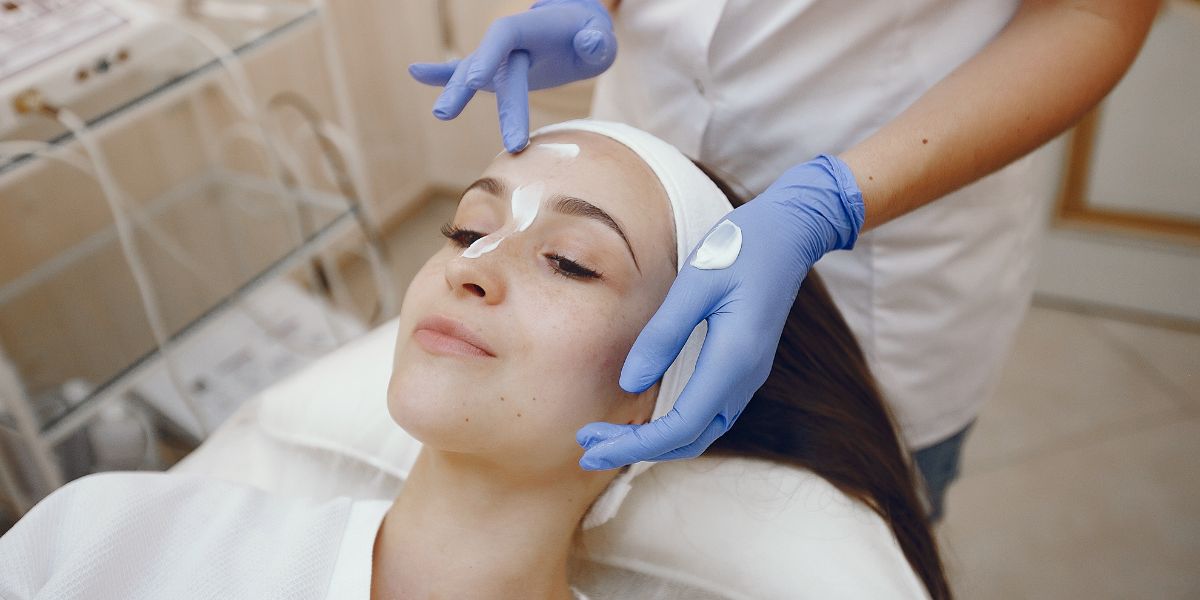
The Dermaplaning Facial Treatment is a simple and effective way to achieve smoother, brighter skin. It gently removes dead skin cells and peach fuzz, leaving your skin fresh and radiant. This non-invasive treatment improves skin texture, enhances product absorption, and creates a flawless base for makeup. At Precise Beauty Bay, dermaplaning is customized to suit your skin, delivering safe and glowing results. This quick, painless treatment requires no downtime, making it perfect for regular skincare maintenance or before special events. With expert care at Precise Beauty Bay, you can enjoy instantly refreshed skin that looks smooth, healthy, and naturally radiant.
What Is a Dermaplaning Facial Treatment?
Dermaplaning Facial Treatment is a professional physical exfoliation treatment in which a trained skincare specialist uses a sterile, surgical-grade scalpel held at a 45° angle to gently scrape away the outermost layer of dead skin cells along with fine vellus facial hair, commonly known as peach fuzz, from areas such as the cheeks, jawline, forehead, and chin. Unlike shaving, which simply cuts hair at the skin’s surface, dermaplaning is a therapeutic skincare procedure that simultaneously exfoliates and removes hair, leaving the skin noticeably smoother, brighter, and more receptive to skincare products, and because it involves a surgical blade, it must always be performed by a licensed professional rather than attempted at home.
Why Dermaplaning Is Important for Skin Health
Dead skin cells naturally accumulate on the face over time, dulling the complexion and creating a rough, uneven texture, while fine facial hair traps dirt, oil, and makeup residue that congests pores and prevents the skin from ever feeling truly clean. Dermaplaning removes both in a single treatment, instantly revealing brighter, smoother skin beneath.
With that surface barrier gone, skincare products absorb far more deeply and work more effectively, active ingredients can actually reach the living skin they’re meant to treat, and makeup glides on seamlessly without catching on texture or fine hair, making the skin not only healthier, but noticeably more radiant and easier to work with.
Key Benefits of Dermaplaning
- Instantly smoother skin texture — Physical removal of the dead cell layer delivers an immediate, tactile difference, leaving skin noticeably softer and more refined from the very first session.
- Brighter, more radiant complexion — Fresh skin cells reflect light more evenly than dead ones, producing an immediate glow and more uniform skin tone that clients notice right away.
- Improved skincare product penetration — Without the barrier of dead cells and fine hair, serums and active ingredients like vitamin C and retinol absorb more deeply into the skin, delivering better and faster results.
- Flawless makeup application — A smooth, hair-free surface allows foundation to glide on seamlessly, blend without catching on texture or peach fuzz, and stay in place significantly longer throughout the day.
- Safe and non-invasive exfoliation — Unlike chemical peels or laser treatments, dermaplaning requires no downtime, uses no harsh chemicals, and causes no discomfort, making it one of the gentlest resurfacing options available.
- Reduction in dullness and dry patches — Dead cell buildup is physically swept away, restoring an even skin tone and eliminating the rough, flaky areas that make skin look tired and dehydrated.
- Suitable for most skin types — When performed by a trained professional, dermaplaning is safe for normal, dry, combination, mature, and hyperpigmented skin, with a pre-treatment assessment ensuring suitability for each individual client.
Dermaplaning vs Other Exfoliation Treatments
Dermaplaning vs Chemical Peels Chemical peels use acids, such as glycolic, salicylic, or lactic acid, to dissolve the bonds between dead skin cells and trigger controlled skin shedding, whereas dermaplaning physically scrapes the surface clean using a surgical blade. Peels can penetrate at varying depths depending on the acid concentration used, making them effective for deeper concerns like acne scarring, pigmentation, and fine lines, but they also carry a higher risk of redness, peeling, and sensitivity in the days following treatment. Dermaplaning, by contrast, works purely on the surface, produces immediate results with no visible recovery period, and is far less likely to cause irritation, making it the gentler of the two options.
Dermaplaning vs Microdermabrasion Microdermabrasion uses either a diamond-tip wand or fine crystal particles to mechanically abrade the skin’s surface, buffing away dead cells through friction. While both treatments are physical forms of exfoliation, microdermabrasion tends to be slightly more aggressive, targeting the surface through abrasion rather than the precise, controlled scraping of a blade. Dermaplaning has the added advantage of simultaneously removing fine facial hair, which microdermabrasion does not address, and many clients find dermaplaning leaves the skin feeling smoother and more even in a single pass.
Exfoliation Intensity
- Dermaplaning — surface-level, gentle, targets the stratum corneum only
- Microdermabrasion — surface to mild mid-level, mechanical abrasion
- Chemical peels (light) — surface to superficial, mild acid action
- Chemical peels (medium/deep) — penetrates deeper layers, more significant skin renewal
Recovery Time
- Dermaplaning — none; skin may appear slightly pink for a few hours
- Microdermabrasion — minimal; mild redness for up to 24 hours
- Light chemical peel — 2–5 days of mild flaking or sensitivity
- Medium to deep chemical peel — 7–14 days of peeling, redness, and downtime
Ideal Candidates
- Dermaplaning — dry, dull, or mature skin; those wanting immediate results with no downtime; clients sensitive to chemicals; anyone wanting a smoother base for makeup
- Microdermabrasion — oily or congested skin; mild acne scarring; thicker skin types that tolerate more abrasion
- Light chemical peels — acne-prone skin, mild pigmentation, uneven skin tone
- Medium to deep peels — deeper wrinkles, significant sun damage, moderate to severe pigmentation
When Dermaplaning Is the Preferred Option
Dermaplaning tends to be the treatment of choice when a client wants instant, visible results without any recovery time, particularly before a special event or occasion. It is also preferred for clients who are pregnant or breastfeeding and therefore avoiding chemical treatments, those with dry or sensitive skin that may react poorly to acids or abrasive techniques, and anyone whose primary concern is surface texture, dullness, or fine hair rather than deeper skin issues. Its combination of exfoliation and hair removal in a single, comfortable, non-chemical session makes it uniquely versatile among professional skin treatments.
What to Expect During a Dermaplaning Facial
Pre-Treatment Cleansing: The session begins with a thorough cleanse to remove all makeup, oil, and impurities. The skin must be completely clean and dry before the blade is applied, as any residue can interfere with the treatment’s effectiveness and hygiene.
The Procedure: The practitioner holds the skin taut and draws a sterile surgical blade across the face at a 45° angle in short, controlled upward strokes, working systematically across the forehead, cheeks, jawline, and chin. The entire face is covered in sections, avoiding the eye area and any irritated skin.
How It Feels: Most clients describe it as a gentle scraping sensation, similar to a credit card being lightly drawn across the skin. It is painless, comfortable, and many clients find it surprisingly relaxing.
Session Duration: A standard session takes 30 to 45 minutes in total, with the dermaplaning itself lasting around 20 to 30 minutes. When combined with add-on treatments like a mask or serum infusion, the appointment may extend to 60 minutes.
Post-Treatment Care: Immediately after, the practitioner applies a calming toner, hydrating serum, nourishing moisturiser, and broad-spectrum SPF to soothe and protect the freshly treated skin.
Immediate Results: Results are visible right away, skin feels noticeably smoother, looks brighter and more even, and has a natural luminosity that many clients describe as one of the most instantly gratifying results of any professional facial.
Aftercare Tips for Best Results
- Apply SPF daily — Freshly treated skin is more sensitive to UV damage, so broad-spectrum SPF 30 or higher is essential every morning for at least one to two weeks post-treatment.
- Keep skincare gentle — Avoid anything with alcohol, strong acids, or artificial fragrance for the first three to five days. Stick to mild cleansers, calming toners, and simple moisturisers.
- Avoid exfoliating again too soon — Scrubs, AHAs, BHAs, and retinoids should be set aside for a minimum of five to seven days to avoid over-stripping the freshly treated skin.
- Prioritise hydration — Use a hyaluronic acid serum followed by a nourishing moisturiser morning and night to keep newly revealed skin plump, healthy, and glowing.
- Book treatments every 4–6 weeks — Regular sessions aligned with the skin’s natural cell turnover cycle maintain smoothness, brightness, and the long-term benefits of consistent exfoliation.
Who Should Consider Dermaplaning?
Good Candidates
- Those with dull, rough, or uneven skin texture looking for an immediate improvement in radiance and smoothness
- Anyone with dry or flaky skin whose moisturisers aren’t fully absorbing or delivering results
- People who want a smoother, more flawless base for foundation and makeup
- Those seeking visible, professional skin rejuvenation without downtime, chemicals, or invasive procedures
- Mature skin that has lost its natural glow and needs surface renewal to look fresher and more youthful
Who Should Avoid It
- Anyone with active acne or breakouts, as the blade can spread bacteria and worsen inflammation
- Those with open skin lesions, infections, or any broken or compromised skin
- People experiencing a rosacea flare-up or severe skin sensitivity
- Anyone with sunburned or recently treated skin that has not yet fully recovered
A professional skin assessment before treatment ensures dermaplaning is safe and appropriate for each individual client.
Why Choose Precise Beauty Bay for Dermaplaning Facial Treatments
- Professional expertise you can trust — Our skilled, fully trained estheticians bring both technical precision and in-depth skincare knowledge to every treatment, ensuring each session is performed safely, confidently, and to the highest professional standard.
- Strict hygiene and sterile tools — We use only single-use, sterile surgical-grade blades for every client without exception. Our treatment environment and tools meet rigorous hygiene standards, so you can relax knowing your skin is in completely safe hands.
- Personalised consultation before every treatment — Every client receives a thorough skin assessment and one-on-one consultation before treatment begins. We take the time to understand your skin concerns, assess your suitability, and tailor the session specifically to your skin’s needs.
- High-quality skincare products — We use only premium, professional-grade skincare products throughout and after each treatment — selected to soothe, nourish, and maximise the results of your dermaplaning session from the moment it ends.
- A comfortable, relaxing experience — From the moment you arrive, our environment is designed to put you at ease. Every treatment is delivered with a calm, unhurried approach so you leave feeling as restored and refreshed as your skin looks.
- Safe, effective, results-driven care — Everything we do is guided by one goal, delivering real, visible results safely. We combine professional technique, quality products, and genuine care for each client to ensure every visit is one that leaves your skin genuinely transformed.
At Precise Beauty Bay, we don’t just treat your skin. we elevate it, because you deserve nothing less than the very best in professional skincare.
Frequently Asked Questions
Is dermaplaning safe for all skin types?
It is suitable for most skin types, including dry, normal, combination, and mature skin, but is not recommended for active acne, rosacea flare-ups, or open lesions. A professional consultation beforehand ensures it is safe for your individual skin.
Does dermaplaning make facial hair grow back thicker?
No, this is a common myth. The blade only removes hair at the surface and has no effect on the follicle beneath, so hair grows back at exactly the same rate, thickness, and colour as before.
How often should you get a dermaplaning facial?
Every four to six weeks is the general recommendation, aligned with the skin’s natural cell turnover cycle. Your esthetician will advise the best schedule based on your skin type and concerns.
Is dermaplaning painful?
Not at all. Most clients describe it as a gentle, light scraping sensation, similar to a credit card being softly drawn across the skin. It is comfortable, painless, and many find it deeply relaxing.
Can I wear makeup after dermaplaning?
It is best to avoid makeup for at least 24 hours post-treatment to allow the skin to recover. After that, makeup can be applied, and most clients notice a significant improvement in how smoothly and evenly it sits on the freshly treated skin.
Leave a Reply